Ever noticed a small symbol on your favorite snack bag and wondered what it means?
When shopping for kosher snacks, those little logos can tell you something important about how your food was made. From crunchy chips to crackers and cookies, kosher certification helps shoppers identify foods that meet Jewish dietary requirements.
But understanding those symbols isn’t always as simple as spotting a letter on the package.
What does a K inside a star mean? What’s the difference between pareve and dairy? And does kosher certification mean a snack is gluten-free?
We’re breaking it all down so you can shop with confidence, understand what those labels really mean, and discover how Island Time cassava chips fit into the mix.
Because choosing your next favorite snack should be easy.
What Makes a Snack Kosher?
Before decoding the symbols, it helps to understand what makes a snack kosher in the first place.
The word kosher refers to foods that comply with Jewish dietary laws, known as kashrut. These rules address the ingredients used in food, how it’s prepared, and the equipment involved in production.
For packaged foods, kosher certification generally means an independent organization has reviewed the product and its manufacturing process to determine whether it meets that organization’s kosher standards.
That means two snacks with nearly identical ingredients might have different kosher certification statuses depending on how they’re made.
How Do You Spot Kosher Certification on a Package?
Now that you know what kosher certification involves, let’s talk about how to recognize it.
Look near the product name or the ingredient list for a small logo, usually a letter inside a shape. Each logo belongs to a specific certifying agency, and these are among the ones you’ll see most often on kosher snacks in US stores:
- OU, a U inside a circle, from the Orthodox Union
- A K inside a circle, the mark of OK Kosher Certification
- Kof-K, a K inside the Hebrew letter kof
- STAR-K, a K inside a star
- The triangle logo of cRc, the Chicago Rabbinical Council
Each symbol identifies a specific organization that supervises kosher food production.
For example, Island Time cassava tortilla chips are STAR-K Kosher certified, meaning their kosher certification is overseen by STAR-K.
Recognizing these symbols can make finding kosher snacks much easier, especially when comparing products from different brands.
You might also come across a package with a simple letter K rather than a distinctive logo.
Unlike registered certification marks, a standalone K doesn’t necessarily identify a particular kosher certification agency.
That doesn’t automatically mean the product isn’t kosher. It simply means the symbol alone may not provide enough information to determine who supervises it.
If that matters to you, the brand’s website or customer service can tell you who certifies it.
Pareve, Dairy, and Meat Kosher Snacks: What the Letters Mean
You’ve found the kosher symbol. Now what about the letters next to it?
The letter or word beside the symbol gives you the kosher category. Pareve (also spelled parve) means the product has no meat or dairy in it. Common examples include fruits, vegetables, grains, and certain packaged snacks, provided they meet the applicable kosher requirements.
A D means dairy, and an M or the word “Meat” means meat.
Pareve is the Hebrew word for neutral. According to STAR-K’s guide to pareve, a pareve item contains no meat, dairy, or poultry derivative, so under kosher rules it can go with a meat, dairy, or fish meal.
The Orthodox Union uses a similar system. A plain OU means pareve, OU-D means dairy ingredients or dairy equipment, and OU-DE means dairy equipment only. One mix-up to avoid: a P next to the symbol means kosher for Passover, not pareve.
| Label you see | Category | What it tells you |
|---|---|---|
| Symbol alone, like a plain OU | Pareve | No meat or dairy derivatives, so it goes with any meal |
| Symbol + D or “Dairy” | Dairy | Contains dairy or was made on dairy equipment |
| OU-DE | Dairy equipment | Made on dairy equipment, without dairy ingredients |
| Symbol + M or “Meat” | Meat | Contains meat or was made on meat equipment |
| Symbol + P | Kosher for Passover | Approved for Passover use; the P doesn’t mean pareve |
Important: Not every kosher certification agency uses identical letters or designations. Always interpret the markings according to the agency whose symbol appears on the package.
Is Kosher the Same as Gluten-Free?
Here’s the short answer: No, kosher certification and gluten-free labeling are not the same thing.
A kosher symbol confirms how a food was produced under kosher law. It says nothing about whether wheat, barley, or rye ended up in the bag.
Plenty of kosher snacks are made with wheat flour, like pretzels, crackers, and many cookies. In the US, “gluten-free” is a voluntary claim with its own FDA labeling standard, which requires less than 20 parts per million of gluten.
If you avoid gluten, check two places on the bag: the kosher symbol for kosher status, and the gluten statement and ingredient list for gluten. One never stands in for the other.
Where Island Time Cassava Chips Fit In
Now that we’ve decoded kosher symbols, let’s bring things back to the snack aisle.
At Island Time, we believe snacking should be simple, flavorful, and full of good vibes.
That’s why we’re proud that our cassava tortilla chips are STAR-K Kosher certified, offering a crunchy option for shoppers looking for kosher snacks.
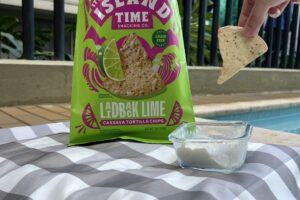
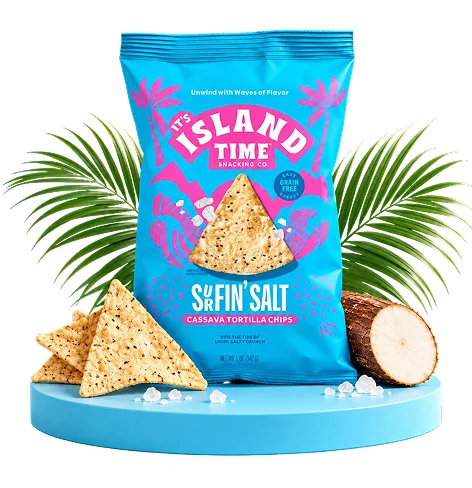
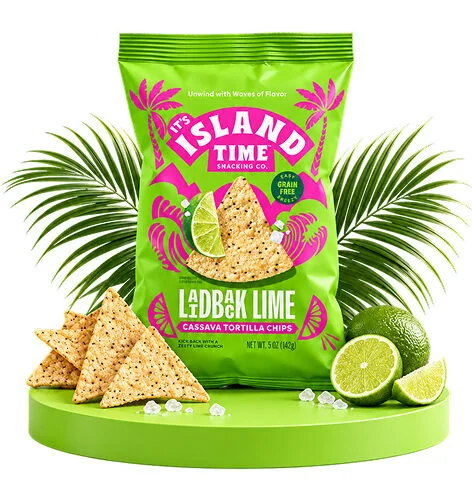
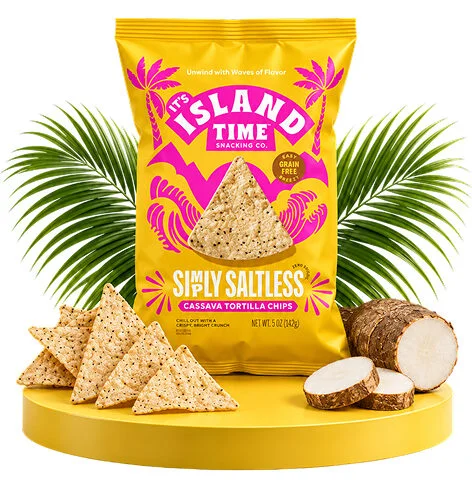
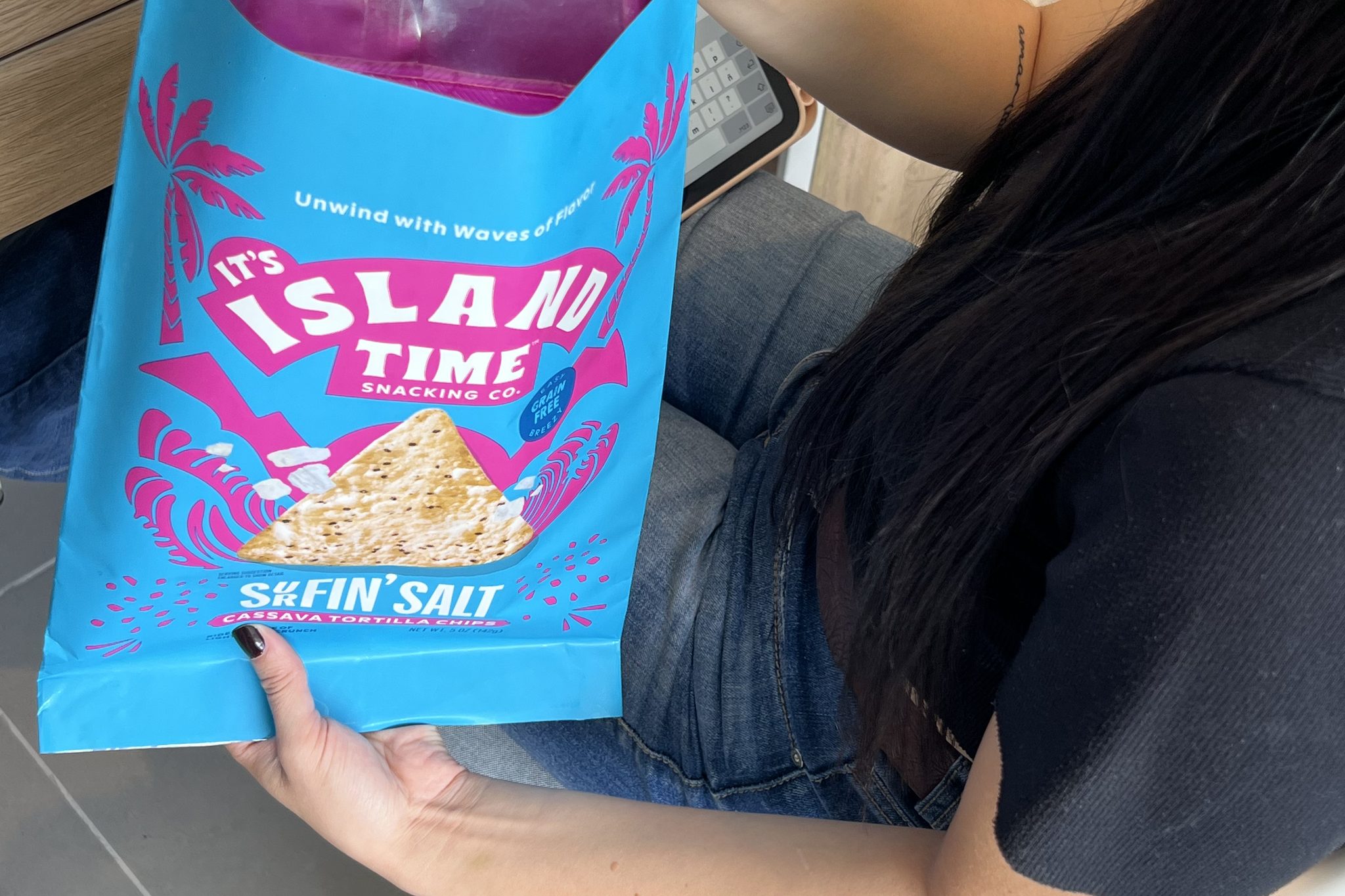
Here’s what’s in the bag: cassava flour, avocado oil, coconut flour, tapioca starch, chia seeds, and sea salt. Our salted flavors include sea salt, while Laidback Lime adds a citrusy twist with lime oil and Simply Saltless skips the added salt. You can see the full breakdown on our ingredients page.
Our chips are also vegan, grain-free, and non-GMO, with no dairy and no seed oils. For the kosher category, go by the designation printed beside the STAR-K symbol on your bag, since that’s where the certifier states it.
Whether you’re packing snacks for a beach day, hitting the road, or enjoying a quiet afternoon at home, Island Time is all about making those little moments more delicious.
Our cassava chips are easy to enjoy straight from the bag, pair with your favorite dips, or bring along for your next adventure.
And if you’re exploring other dietary labels, we’ve got you covered.
Check out our guides to gluten-free snacks and vegan snacks for more information about understanding ingredients and finding snacks that fit your preferences.
Because knowing what’s in your snack should be easy, and enjoying it should be even easier.
Frequently Asked Questions About Kosher Snacks
Are Kosher Snacks Healthier Than Regular Snacks?
Not necessarily.
Kosher certification addresses religious dietary requirements and manufacturing supervision, not the overall nutritional quality of a food.
To compare kosher snacks based on calories, sodium, fat, or fiber, check the Nutrition Facts panel and ingredient list just as you would with any other packaged snack.
Where Can I Buy Island Time Cassava Chips?
You can shop Island Time cassava tortilla chips on Walmart and browse our products on Amazon.
You can also use our product locator to find retailers carrying Island Time near you.
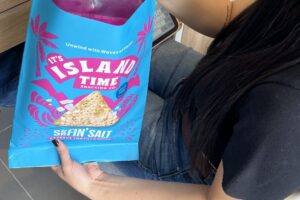
Look for Surfin’ Salt, Laidback Lime, and Simply Saltless in our 5 oz bags.
Kosher Snacks, Decoded: The Symbol, the Letter, and the Gluten Line
Finding kosher snacks doesn’t have to feel complicated.
Once you understand what kosher certification means, how to recognize common symbols, and what pareve, dairy, and meat designations tell you, reading snack labels becomes a whole lot easier.
Remember, the symbol identifies the certifying organization, the additional markings explain the kosher category, and the ingredient and nutrition labels help you evaluate other dietary needs.
And when you’re ready for a satisfying cassava crunch, Island Time has three STAR-K Kosher certified flavors to explore.
Keep it classic with Surfin’ Salt, add a zesty twist with Laidback Lime, or enjoy the no salt added simplicity of Simply Saltless.
Grab your favorite bag, find your happy place, and enjoy the moment.
Anytime is a good time for Island Time.